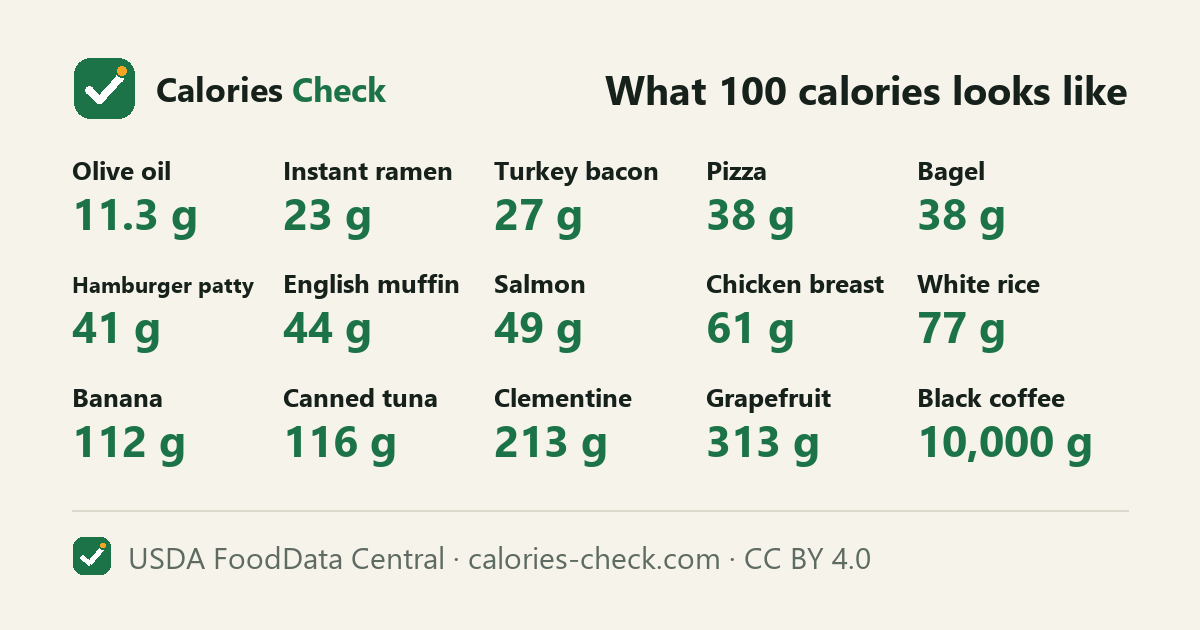
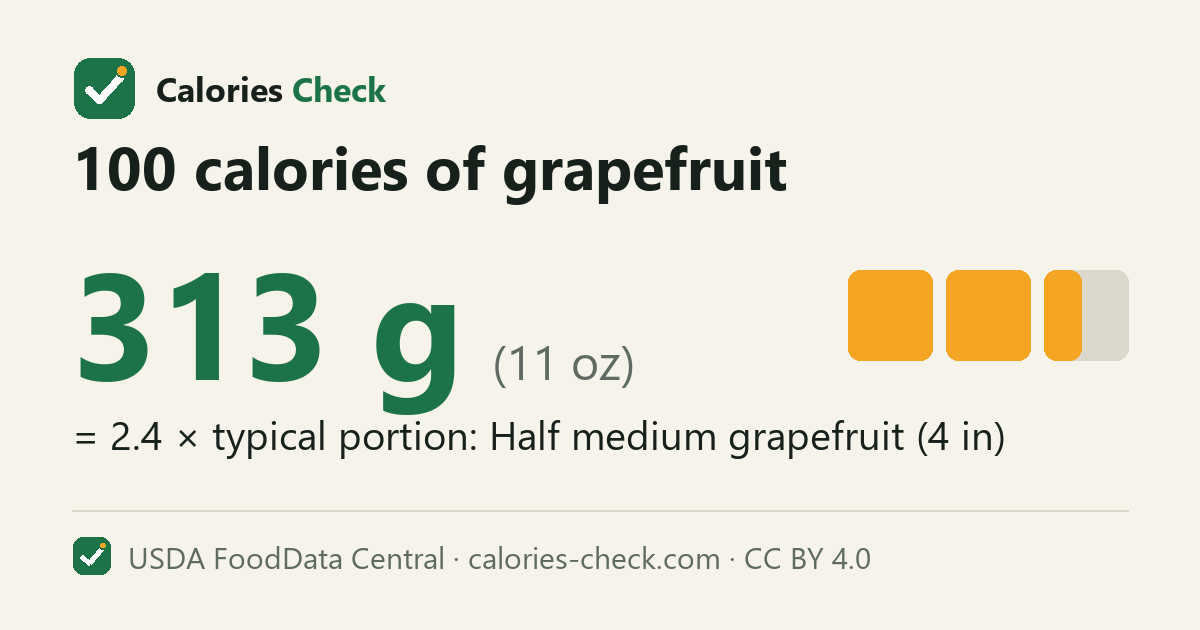
100 calories (418 kJ) can be 0.4 oz (11.3 g) of olive oil, a little less than a tablespoon, or 11 oz (313 g) of grapefruit, more than two grapefruit halves. The chart shows the weight with 100 calories for every food we cover and how many typical portions that is. All values come from USDA FoodData Central.
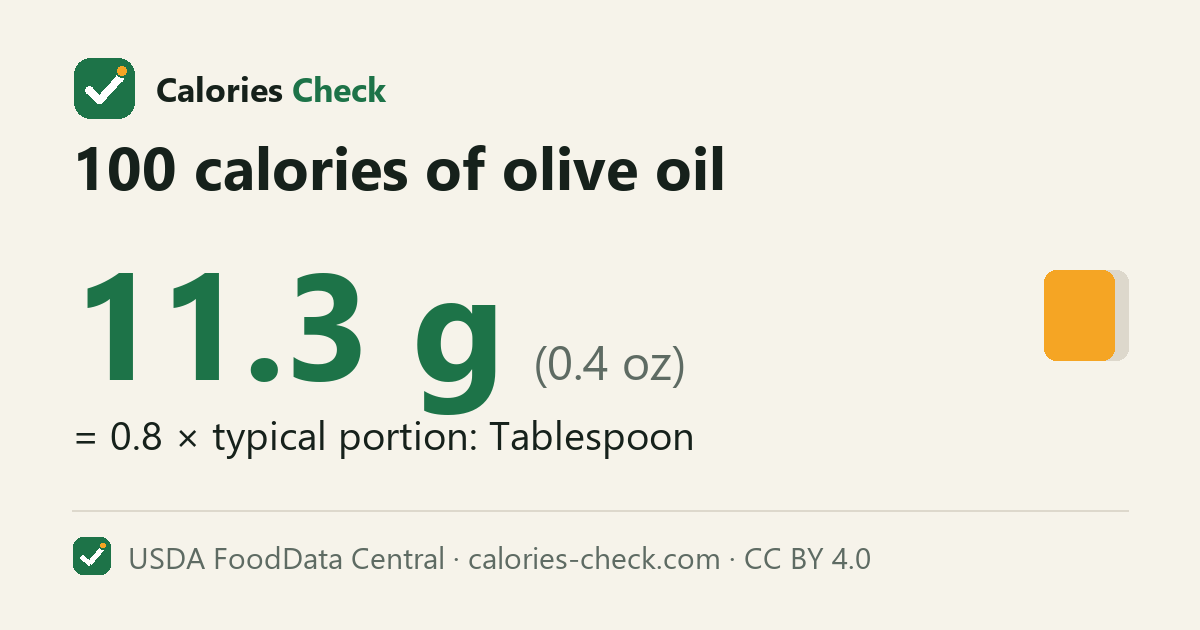
Olive oil
11.3 g (0.4 oz)
= 0.8 × typical portion: Tablespoon
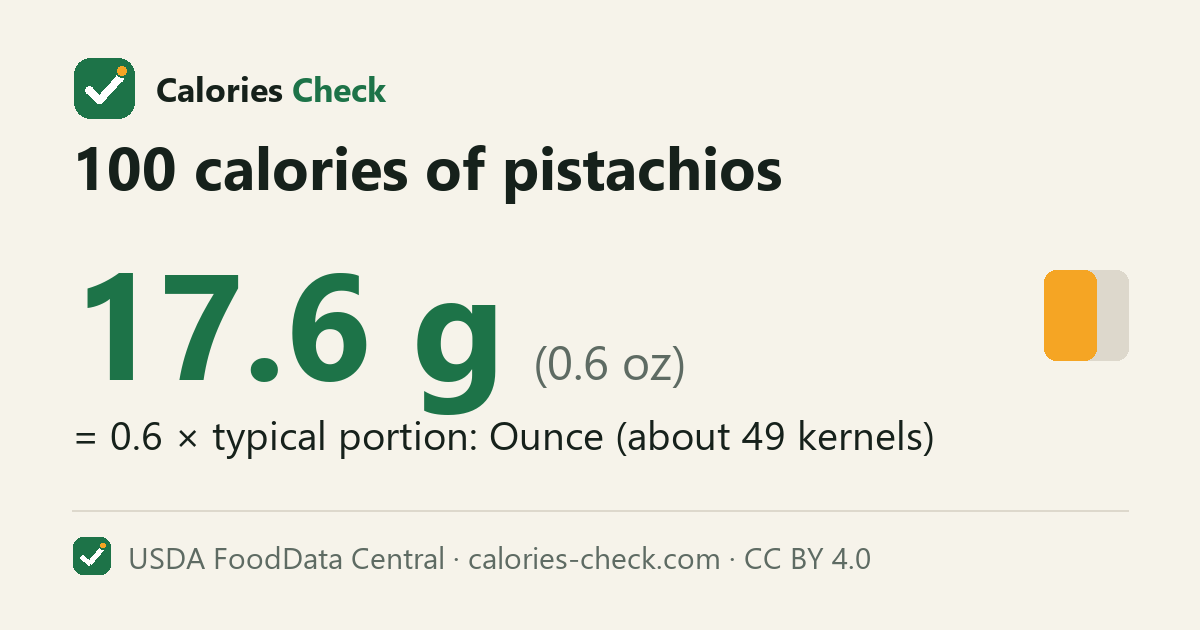
Pistachios
17.6 g (0.6 oz)
= 0.6 × typical portion: Ounce (about 49 kernels)
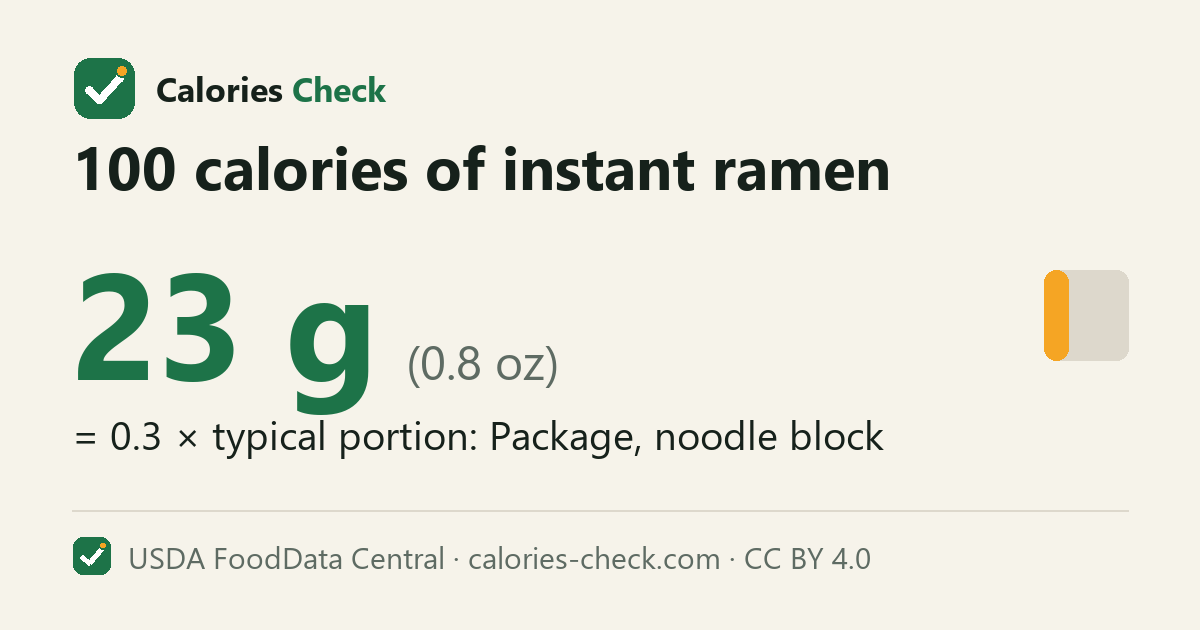
Instant ramen
23 g (0.8 oz)
= 0.3 × typical portion: Package, noodle block
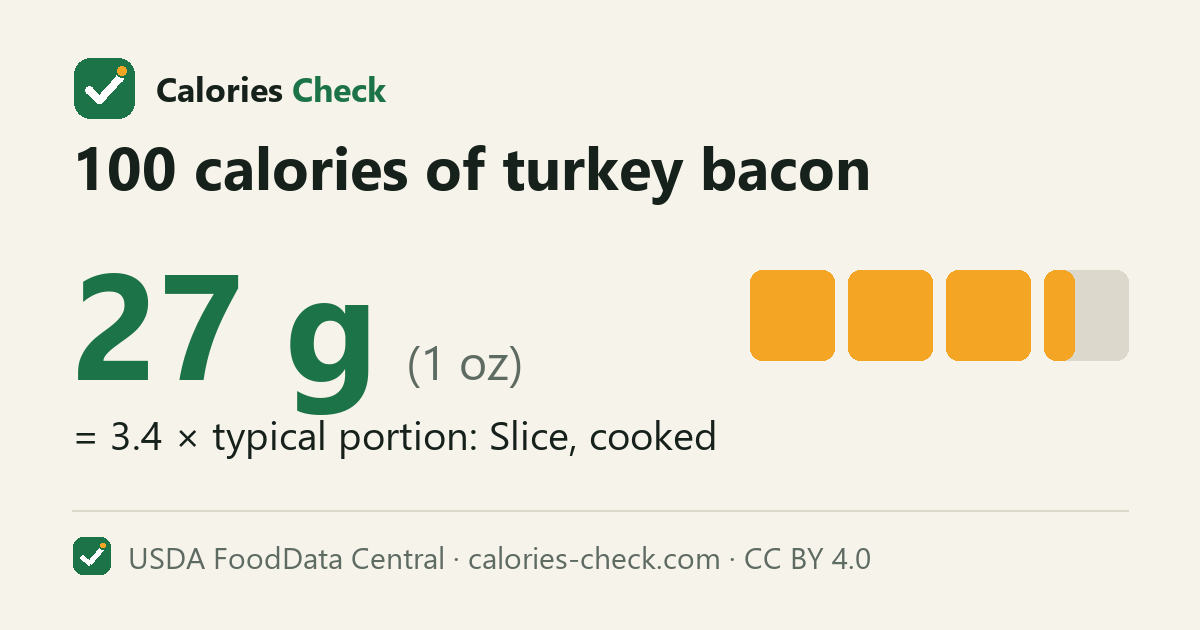
Turkey bacon
27 g (1 oz)
= 3.4 × typical portion: Slice, cooked
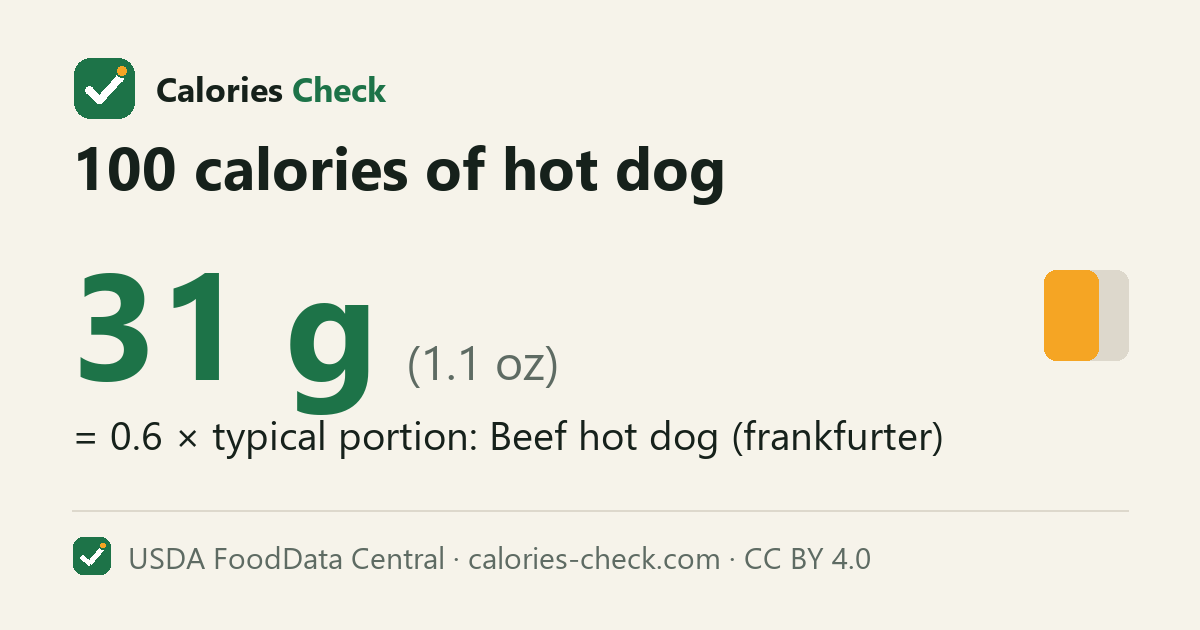
Hot dog
31 g (1.1 oz)
= 0.6 × typical portion: Beef hot dog (frankfurter)
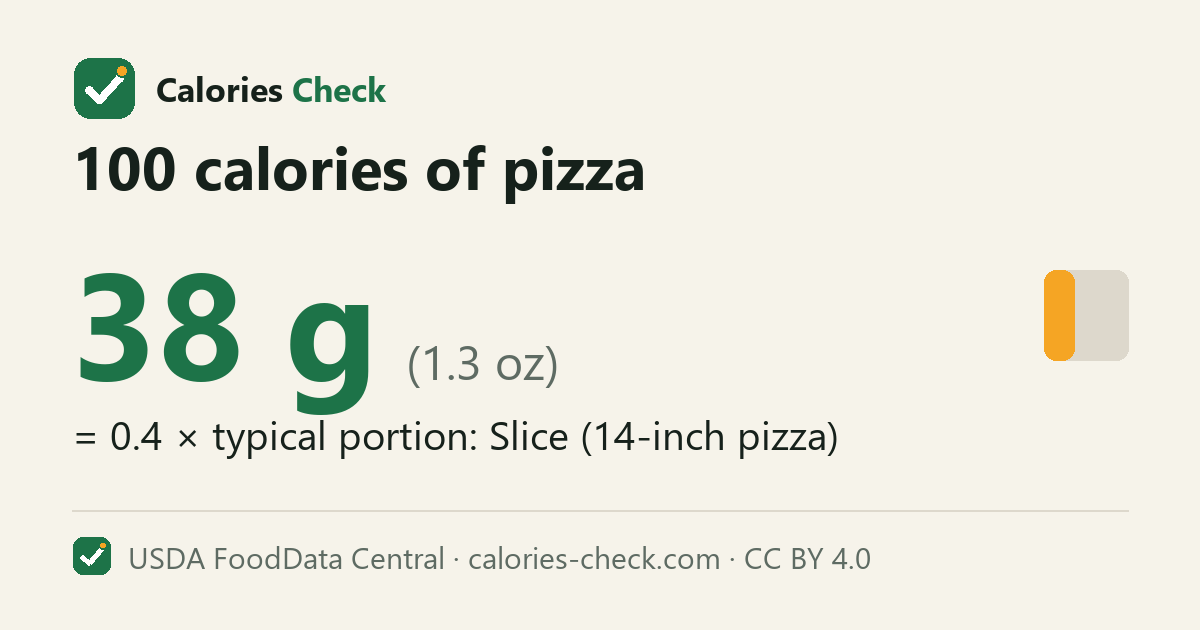
Pizza
38 g (1.3 oz)
= 0.4 × typical portion: Slice (14-inch pizza)
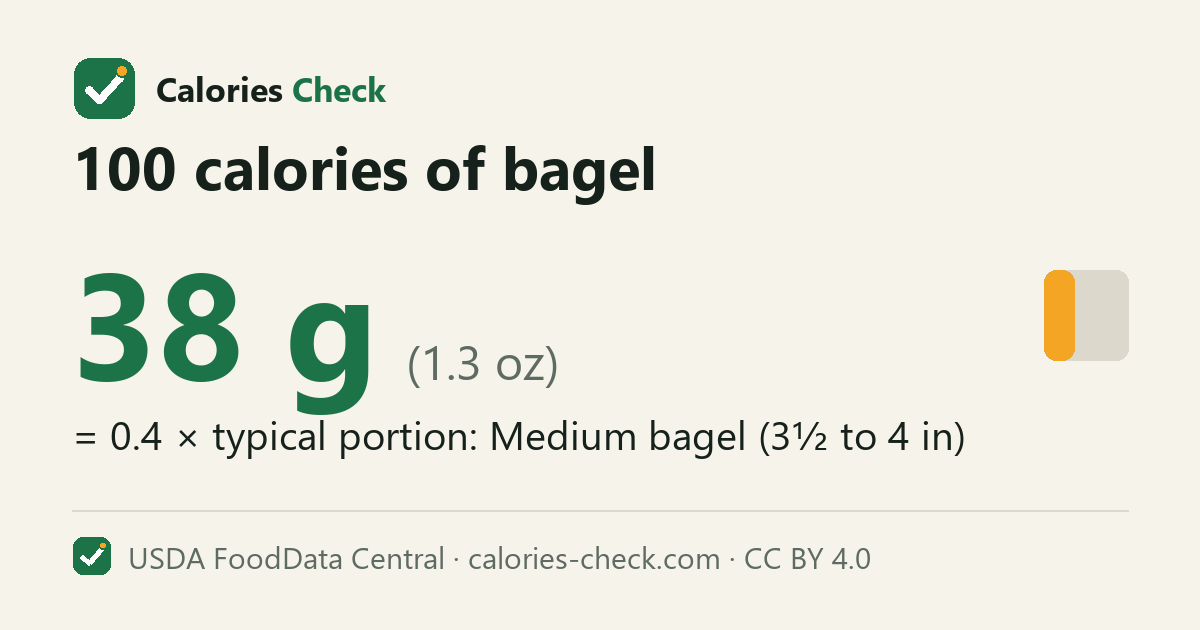
Bagel
38 g (1.3 oz)
= 0.4 × typical portion: Medium bagel (3½ to 4 in)
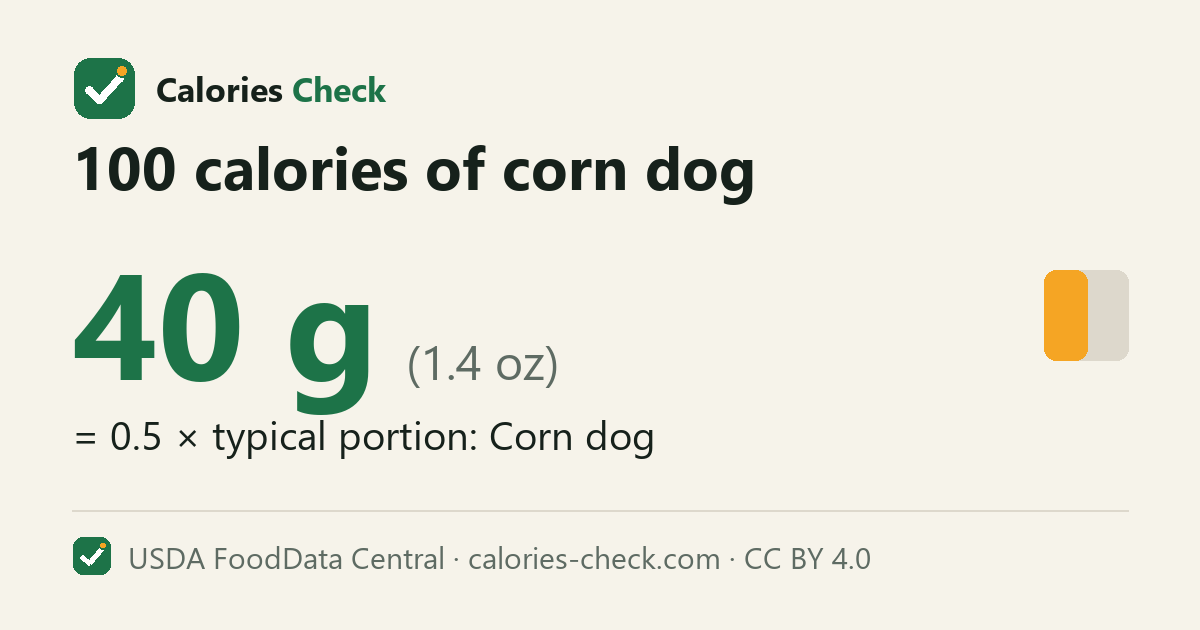
Corn dog
40 g (1.4 oz)
= 0.5 × typical portion: Corn dog
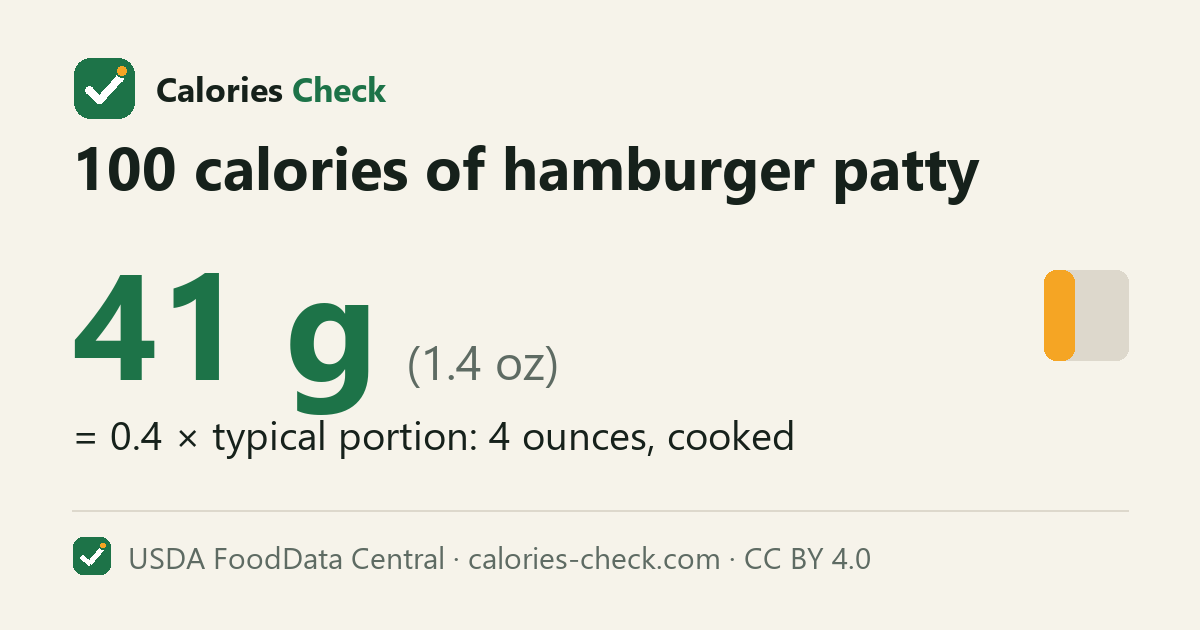
Hamburger patty
41 g (1.4 oz)
= 0.4 × typical portion: 4 ounces, cooked
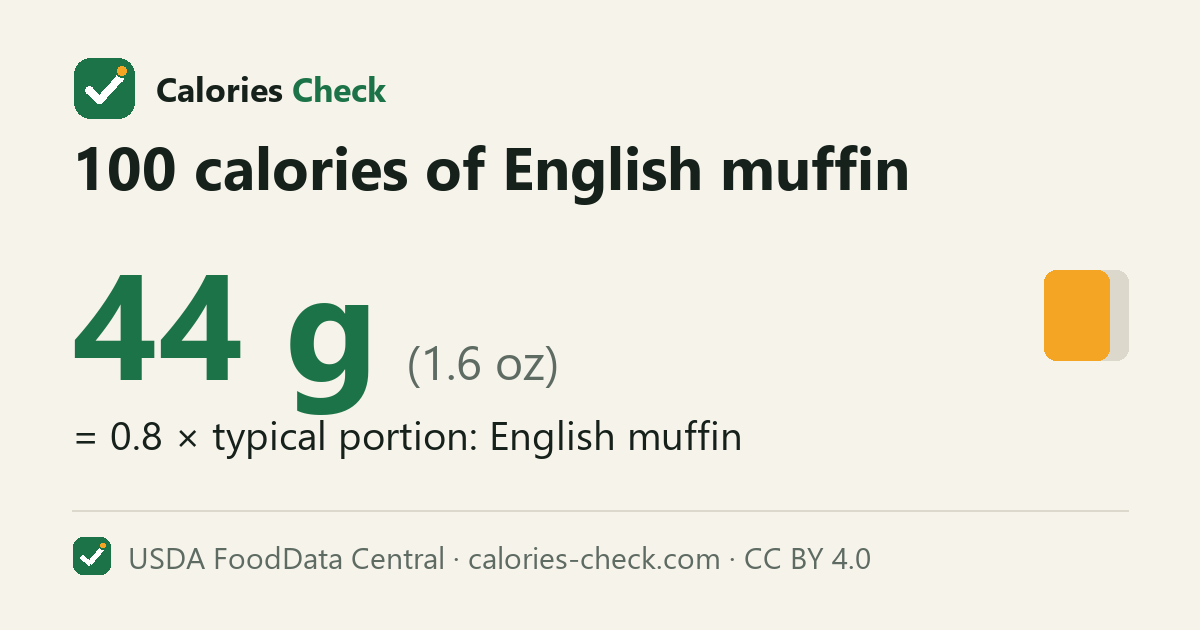
English muffin
44 g (1.6 oz)
= 0.8 × typical portion: English muffin
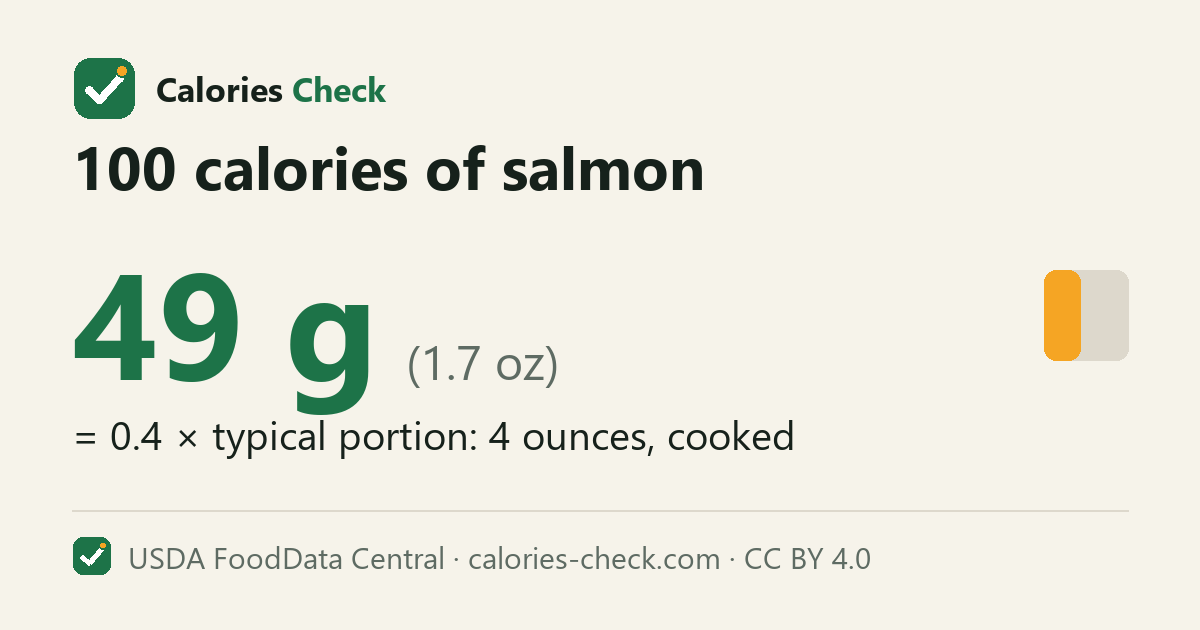
Salmon
49 g (1.7 oz)
= 0.4 × typical portion: 4 ounces, cooked
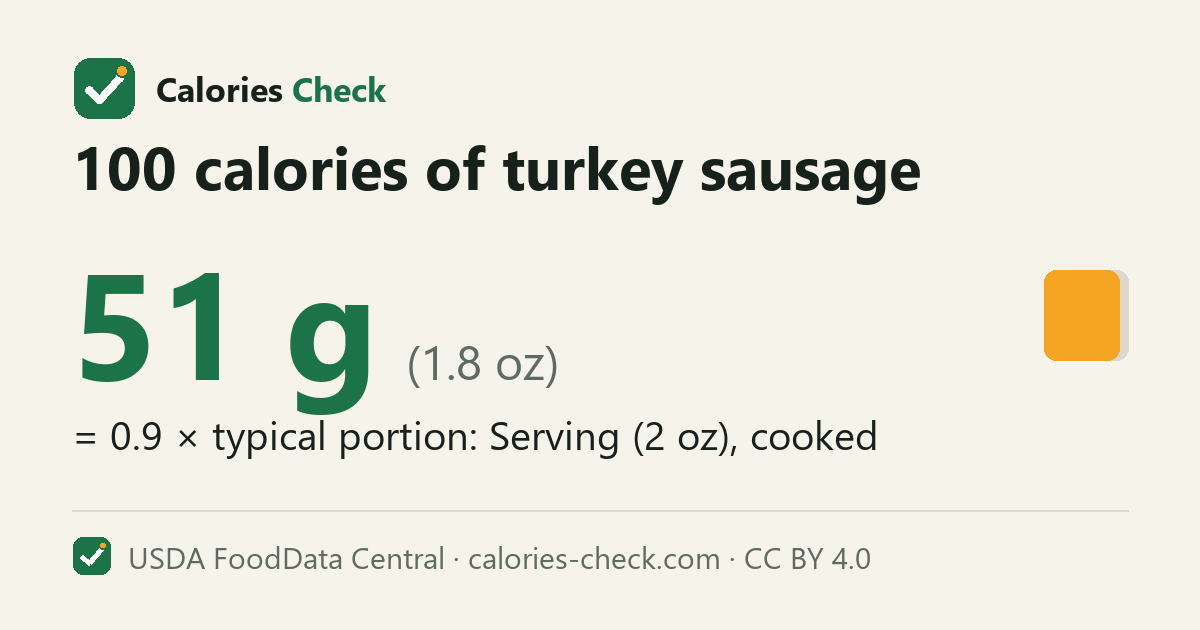
Turkey sausage
51 g (1.8 oz)
= 0.9 × typical portion: Serving (2 oz), cooked
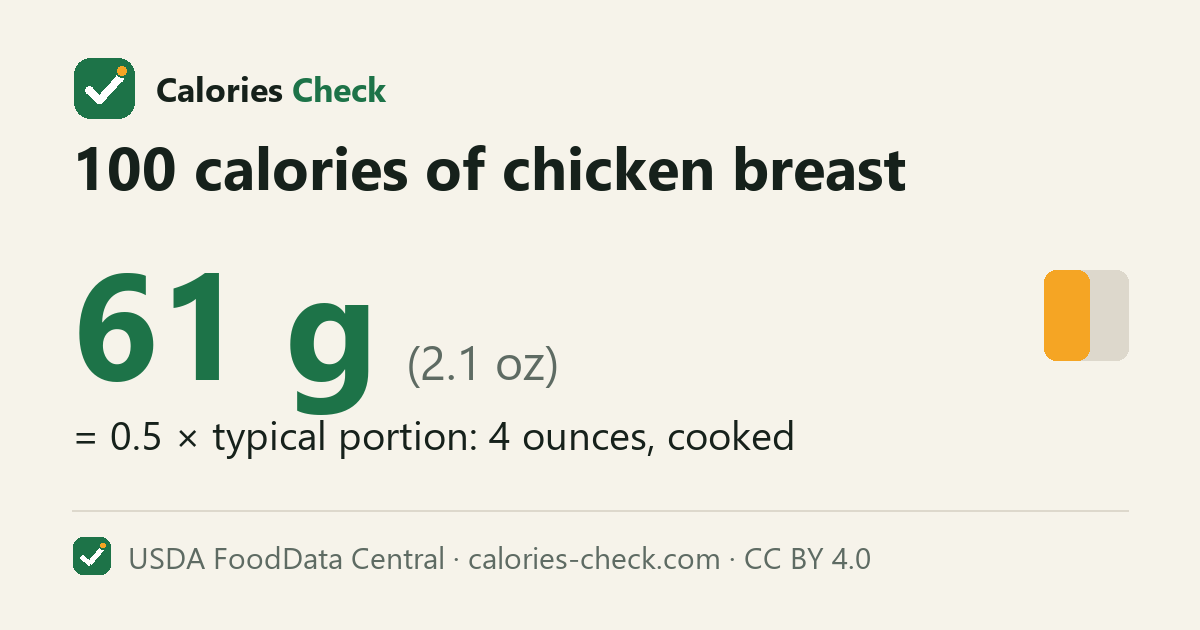
Chicken breast
61 g (2.1 oz)
= 0.5 × typical portion: 4 ounces, cooked
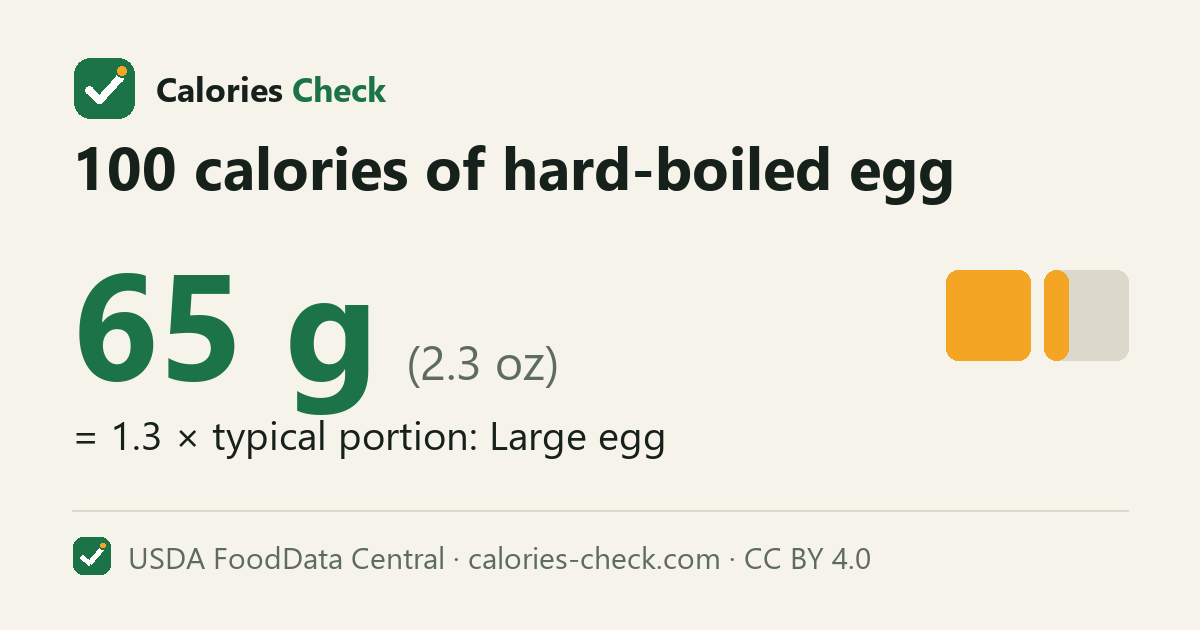
Hard-boiled egg
65 g (2.3 oz)
= 1.3 × typical portion: Large egg
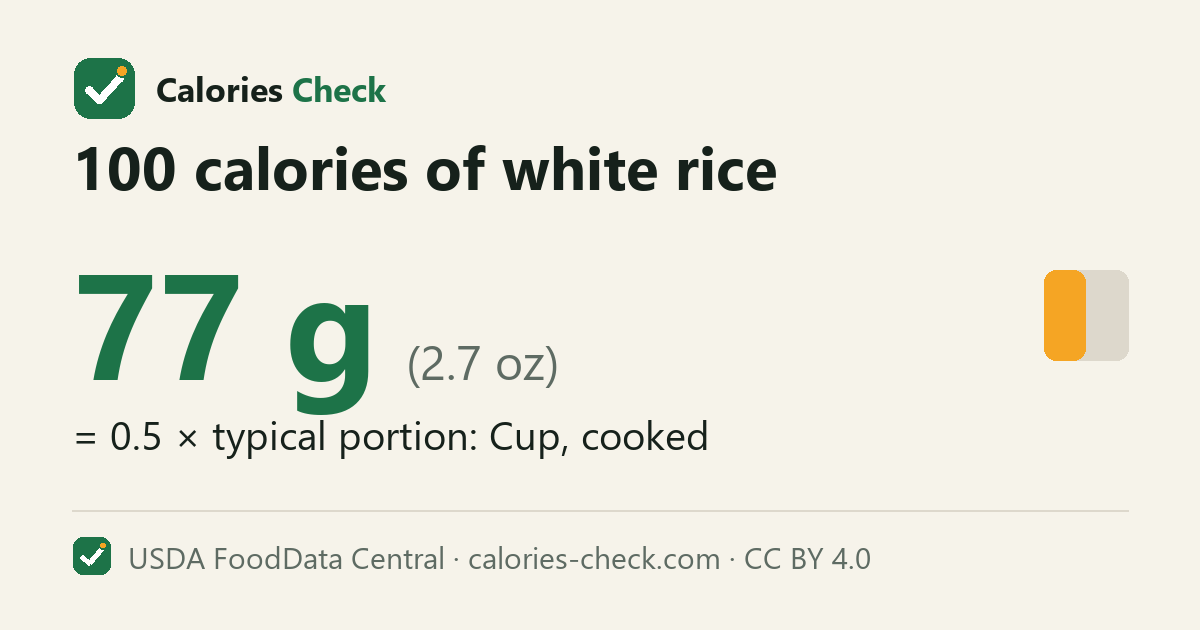
White rice
77 g (2.7 oz)
= 0.5 × typical portion: Cup, cooked
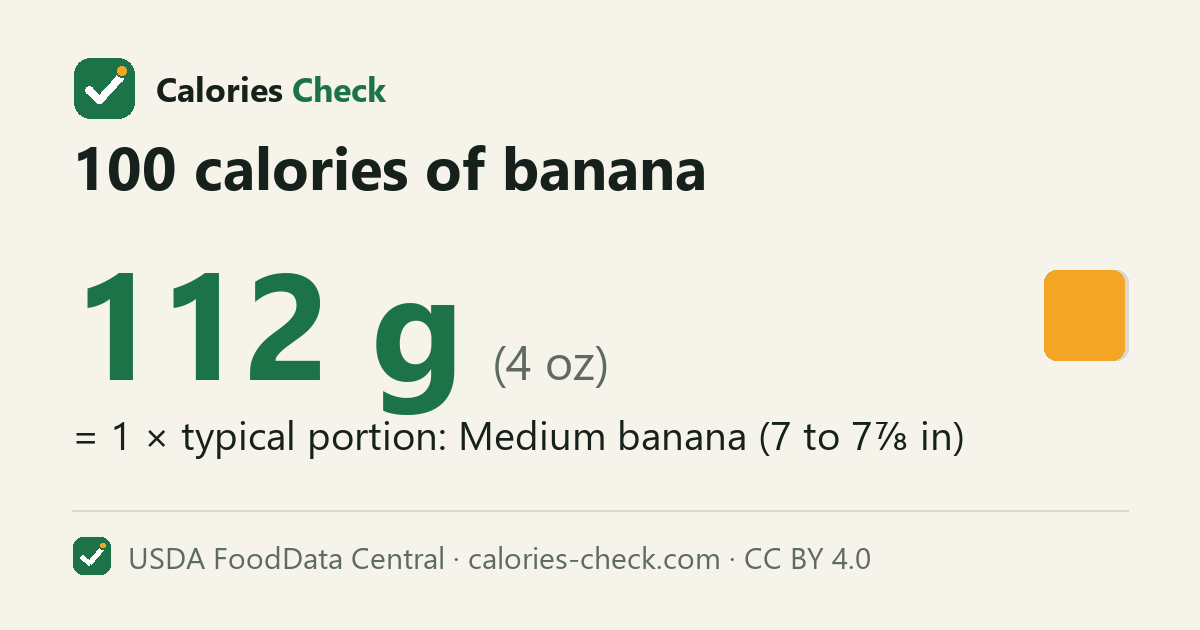
Banana
112 g (4 oz)
= 1 × typical portion: Medium banana (7 to 7⅞ in)
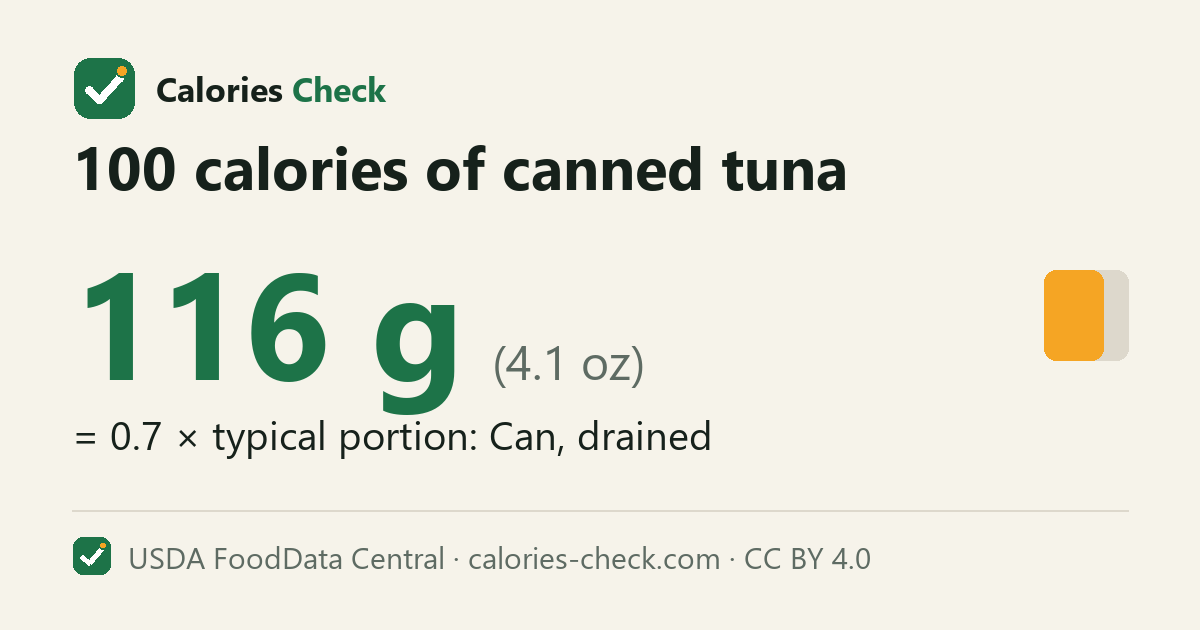
Canned tuna
116 g (4.1 oz)
= 0.7 × typical portion: Can, drained
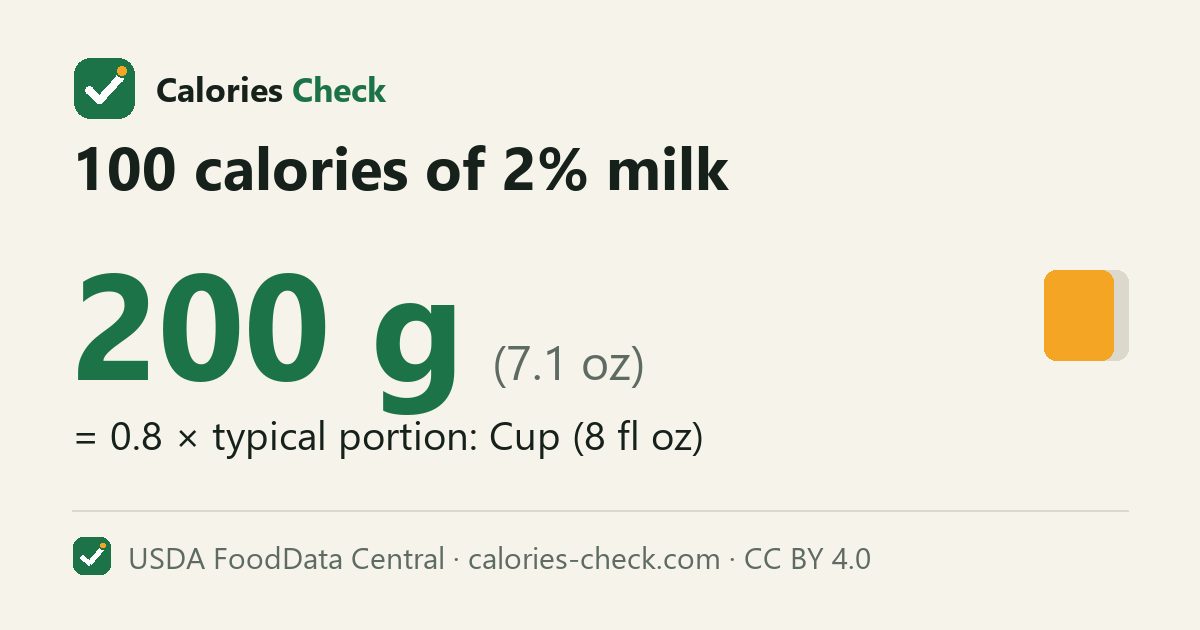
2% milk
200 g (7.1 oz)
= 0.8 × typical portion: Cup (8 fl oz)
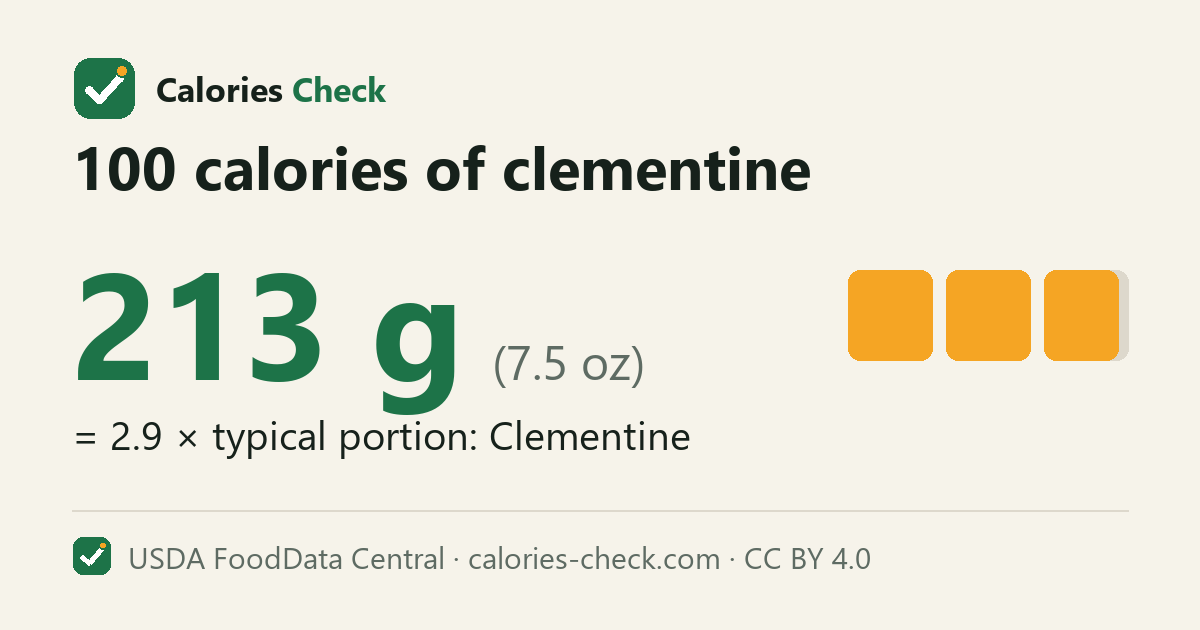
Clementine
213 g (7.5 oz)
= 2.9 × typical portion: Clementine
Grapefruit
313 g (11 oz)
= 2.4 × typical portion: Half medium grapefruit (4 in)
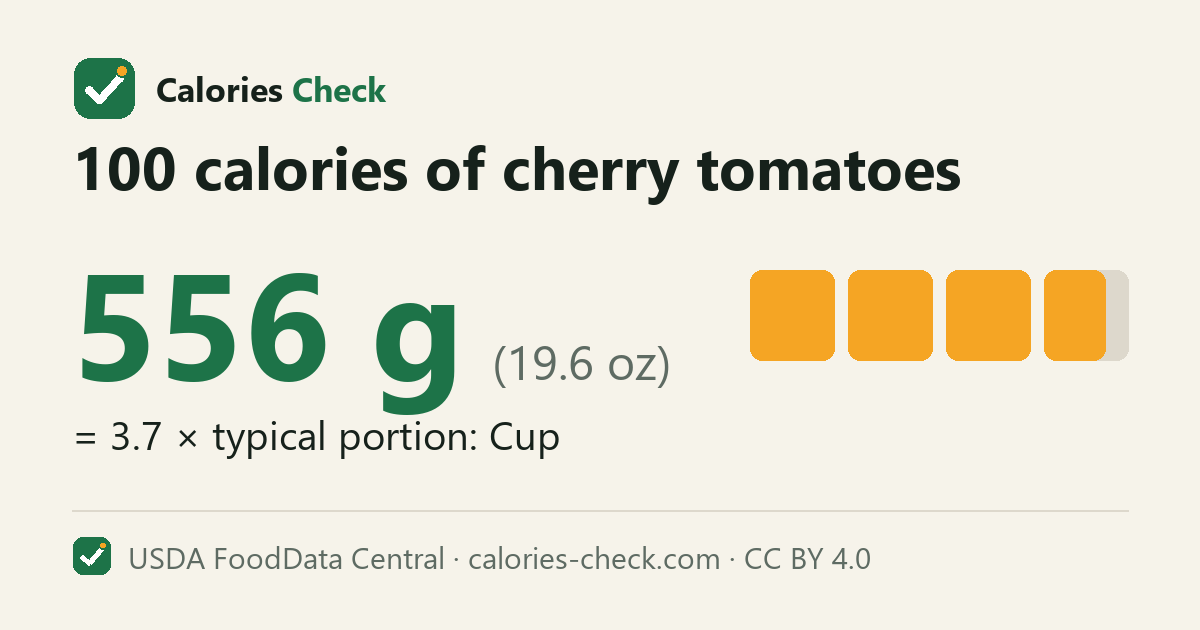
Cherry tomatoes
556 g (19.6 oz)
= 3.7 × typical portion: Cup
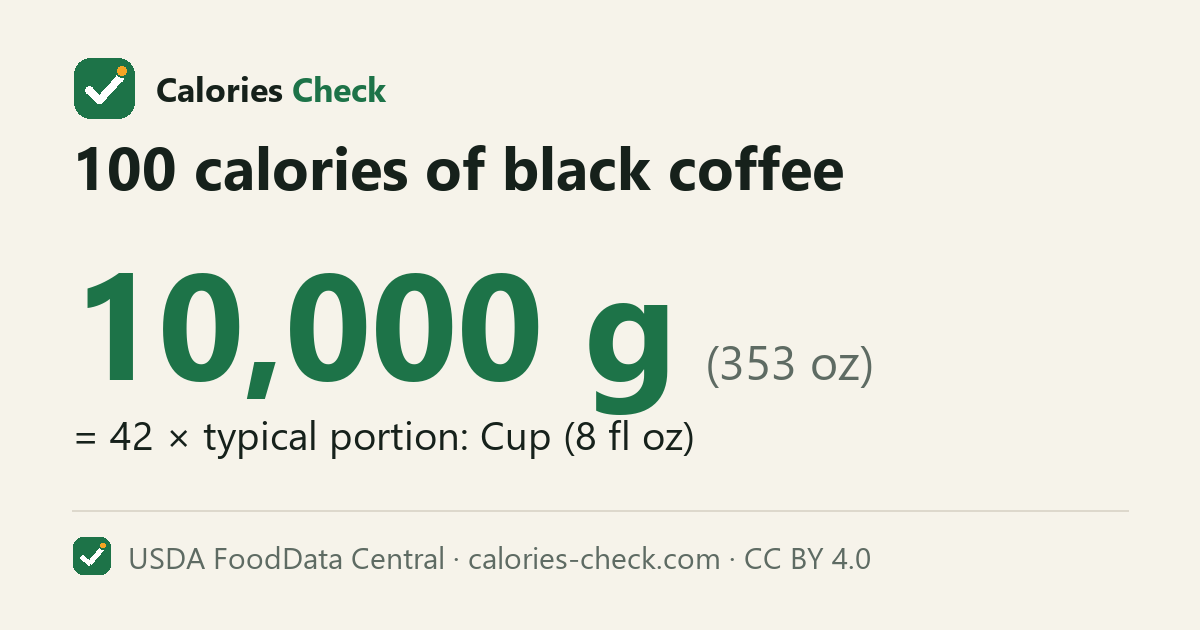
Black coffee
10,000 g (353 oz)
= 42 × typical portion: Cup (8 fl oz)
How to read the chart
Each box shows how much of a food has 100 calories, in grams and ounces. The line below compares that amount with a typical portion, the same portion our food pages show first. Each block in the bar stands for one typical portion.
The foods are sorted by weight. Foods at the top have the most calories per gram, so 100 calories of them is a small amount. Tap a food to open its page with every portion and a calculator. Foods without a link get their own page in the coming days, and we add new foods every week.
Why 100 calories can be a spoonful or a bowl
The difference comes from what a food is made of. Fat has about 9 calories per gram, protein and carbohydrates about 4 (see Methodology and Sources). Water and most fiber add weight but almost no calories.
- Oils and fats are almost pure fat, so 100 calories is only a spoonful.
- Dry foods such as bread, bagels and instant ramen have little water. The ramen value is for the dry noodle block, before cooking.
- Cooked meat and fish are in the middle. Values are for cooked weight, which is lower than raw weight because meat loses water when cooked.
- Fruit is mostly water, so 100 calories is a large serving.
- Black coffee has so few calories that 100 calories would take dozens of cups. In coffee drinks, milk, cream and sugar bring most of the calories.
Using 100-calorie steps
If you track what you eat, 100-calorie steps make foods easy to compare. You can see at a glance how much rice, fruit or chicken fits into the same amount of energy. Your daily calorie target comes from the calorie calculator, and the food chart lists calories, protein, carbs and fat for a typical portion of each food.
Frequently asked questions
How much olive oil is 100 calories?
0.4 oz (11.3 g) of olive oil has 100 calories. That is a little less than one tablespoon.
How much banana is 100 calories?
4 oz (112 g) of banana, without the peel, has 100 calories. That is about one medium banana.
How much rice is 100 calories?
2.7 oz (77 g) of cooked white rice has 100 calories, about half a cup.
How much chicken breast is 100 calories?
2.1 oz (61 g) of roasted chicken breast without skin has 100 calories.
How many kilojoules are 100 calories?
100 calories (kcal) equal 418 kJ, because 1 kcal is 4.184 kJ. Food labels in Australia and New Zealand use kJ.
Can I use the chart and graphics on my website?
Yes. The chart and the graphics are free to reuse under the CC BY 4.0 license. Credit “Calories Check” and link to this page. Each food in the chart has a link to its graphic once it is ready.
Sources
- U.S. Department of Agriculture, Agricultural Research Service. FoodData Central, SR Legacy. The FDC ID of each food is listed in the food chart CSV.
Values are rounded. Packaged foods can differ by brand, so the label on your pack is the best guide for that product. This page is general information and does not replace advice from a doctor or registered dietitian.
Cite this page
Calories Check Editorial Team (2026, November 16). What 100 Calories Looks Like. Calories Check. https://calories-check.com/what-100-calories-looks-like/
Link to this page (HTML)
<a href="https://calories-check.com/what-100-calories-looks-like/">What 100 Calories Looks Like – Calories Check</a>